
CVB GigE Vision Server
A software-defined camera layer for scalable, standards-based vision systems.
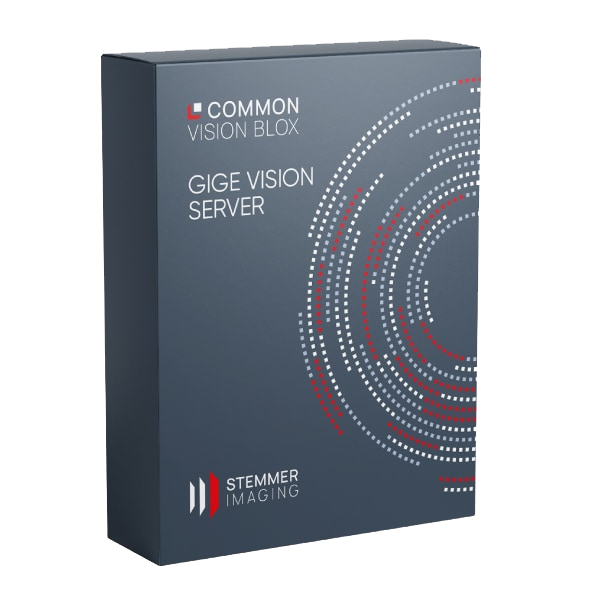
Software-defined GigE Vision streaming for flexible, multi-source vision architecturesCVB GigE Vision Server turns a standard PC or embedded system into a fully compliant GigE Vision device capable of broadcasting complex, fused data streams. Built for U.S. OEMs and integrators who need a more adaptable approach to multi-sensor vision, the server enables developers to combine data from multiple sources and expose it through a single, standards-based interface. This makes it easier to build scalable imaging systems, support distributed processing, and integrate nontraditional data types into modern machine vision workflows.Engineered to maintain GigE Vision and GenDC compatibility, GigE Vision Server enables powerful, software-driven camera behavior without the limitations of fixed hardware design. The result is a versatile, performance-oriented framework for advanced inspection, automation, and sensor fusion tasks.
Unified Multi-Source Streaming
GigE Vision Server allows developers to merge video, metadata, and additional sensor inputs into one coherent GigE Vision stream. Whether combining multiple cameras, integrating specialized sensors, or routing custom data structures, the server ensures smooth communication with any GEV-compliant application.
Core streaming capabilities include:
- Fusion of multiple camera feeds or heterogeneous sensor data
- Support for complex, structured data types
- Presentation of all inputs through a unified, standards-compliant interface
- Easy interoperability across diverse machine vision ecosystems
This flexibility helps teams create sophisticated systems without redesigning hardware or adding specialized components.
Standards Compliance with Expanded Capability
The server fully supports GEV 3.0 and GenDC, allowing systems to benefit from next-generation data transport while remaining compatible with existing GigE Vision tools and software stacks.
Standards-driven advantages:
- Broad compatibility with GEV-compliant applications
- Structured, efficient transport through GenDC
- Programmable GenICam features for dynamic, software-defined behavior
- Smooth integration into both legacy and modern architectures
This standards alignment ensures long-term usability and simplifies interoperability across multi-vendor systems.
High-Performance Zero-Copy Streaming
For applications that demand low latency and high throughput, GigE Vision Server uses a zero-copy architecture that minimizes overhead. This keeps performance predictable even when handling large or complex multi-sensor data streams.
Performance benefits include:
- Reduced memory transfer overhead
- Stable, real-time throughput for demanding workloads
- Efficient resource usage across CPUs and embedded systems
- Scalable performance for multi-input configurations
This design makes the server ideal for edge devices, robotics systems, and high-speed inspection platforms.
Support for Distributed Vision Workflows
GigE Vision Server makes it easier to build distributed and modular vision systems by streaming fused or preprocessed data to downstream devices. This allows compute workloads to be shared more efficiently across multiple nodes and gives developers greater flexibility in how they structure their overall system.These capabilities support the creation of edge processing nodes, multi-stage processing pipelines, and sensor fusion setups involving multiple cameras or data sources. By functioning as a software-defined virtual camera within larger networks, the server enables system designs that go beyond the limitations of fixed hardware and opens the door to more advanced, adaptable architectures.
Find the Right CVB Tools for Your Application
Explore our CVB software modules to identify the components best suited for your multi-source streaming, integration, and distributed vision requirements.