
Machine Vision Blog

Why Lighting and Cabling Often Determine the Success of Medical Imaging Systems

Why Lighting and Cabling Often Determine the Success of Medical Imaging Systems

In medical imaging systems, it’s rarely the camera that causes the most problems. Ask engineers who have supported deployed systems long enough, and a pattern emerges. Image quality issues traced back to inconsistent illumination. Intermittent failures caused by connector fatigue or cable routing. Performance that slowly degrades over time, even though the core imaging hardware remains unchanged.

Continue Reading »
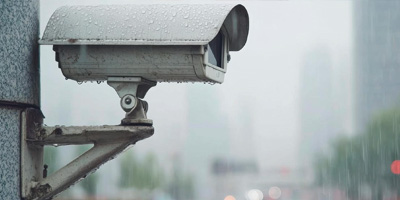
Intelligent Traffic Systems: Designing Vision Platforms That Perform on Real Roads, Not Just on Paper

Intelligent Traffic Systems: Designing Vision Platforms That Perform on Real Roads, Not Just on Paper

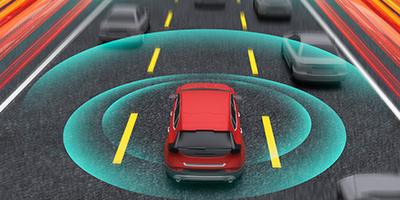
Cities and transportation agencies don’t deploy intelligent traffic systems (ITS) because they want better cameras. They deploy them because existing infrastructure can no longer keep up with real-world demands: growing congestion, rising safety concerns, and the need for actionable, real-time data. Machine vision has become one of the foundational technologies behind modern ITS deployments - from adaptive traffic signals and license plate recognition to incident detection and rail monitoring.

Continue Reading »
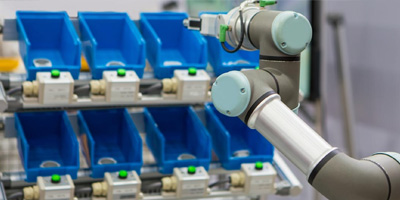
Bin Picking Is the “Holy Grail” for a Reason

Bin Picking Is the “Holy Grail” for a Reason

If you’ve spent any time around factory automation, you’ve heard some version of the same statement: “Bin picking is the holy grail.” It’s not hype. It’s a concise way of describing the gap between what robots do exceptionally well (repeatable, deterministic motion) and what real factories ask them to do more and more often (handle variability and randomness without slowing production).

Continue Reading »
Global vs. Rolling Shutters in Machine Vision: Unraveling the Differences

Global vs. Rolling Shutters in Machine Vision: Unraveling the Differences

Image capture is crucial in machine vision to ensure accurate and reliable results. At the heart of this process lies the camera shutter, which controls how light enters the sensor. Two main types of shutters dominate the field: global shutters and rolling shutters. Understanding the differences between these technologies is essential for machine vision engineers, system integrators, and industrial automation professionals to optimize their systems for specific applications.

Continue Reading »
How Can We Commute More Safely? Machine Vision May Have the Answer

How Can We Commute More Safely? Machine Vision May Have the Answer

When people think of traffic and Covid19, they recall the eerily empty streets from the pandemic's early period. In the longer term, Covid has actually increased traffic throughout the nation, as health fears pushed people into cars and away from public transit. According to the Department of Transportation, there has been an 18.4% increase in traffic fatalities since the first half of 2020.

Continue Reading »
How Machine Vision Powers the James Webb Telescope

How Machine Vision Powers the James Webb Telescope

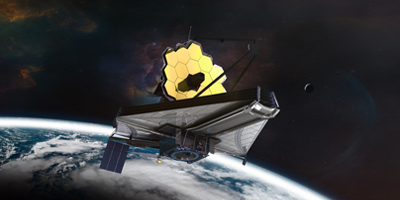
When the James Webb telescope released its first images in mid-July 2022, the world was amazed by photographs of the cosmos in more detail than they’d ever seen before. NASA shared images that showed us famous nebulae in more detail than we’d ever seen, Jupiter in a shocking new light, and images from the beginning of the universe. Like the Hubble Telescope before it, the James Webb telescope is able to do this work in part thanks to an amazing technology at its heart: machine vision.

Continue Reading »
How Machine Visions Helps Solve Food Scarcity

How Machine Visions Helps Solve Food Scarcity

According to the WTO, 345 million people in 82 countries suffer from food security issues as of June 2022. There’s no one cause for this—war, drought, and other external factors play a huge role. One way to ameliorate this problem is by ensuring that, where crops are being grown successfully, nothing is going to waste. Machine vision plays a part in ensuring that everything farmers grow makes it to someone’s dinner table.

Continue Reading »
What Is In-Sensor Computing & Why It Matters for Machine Vision

What Is In-Sensor Computing & Why It Matters for Machine Vision

All businesses require quality control and careful inspection, especially in today's technologically evolved world. Performing consistent inspections throughout the manufacturing process guarantees a higher-quality product. Employers have to devote a substantial amount of resources to these repetitive inspections. However, because of the capabilities of in-sensor computation in machine vision, inspections can now be completed much faster and conveniently.

Continue Reading »
How Do Self-driving Cars See?

How Do Self-driving Cars See?

Driving can be an exhilarating experience. Imagine cruising along a coastline in a convertible or driving a sports car at high speeds on the Autobahn. But that’s not an everyday experience for most drivers.

Continue Reading »
View Previous Articles

Ready to Discuss Your Machine Vision Needs?

Ready to apply what you've learned? Our vision specialists are here to help you select the right components, troubleshoot challenges, and design systems that perform. Free consultation, expert recommendations, fast response.