

The Critical Details That Separate Lab Performance From Real-World Reliability
In medical imaging systems, it’s rarely the camera that causes the most problems.
Ask engineers who have supported deployed systems long enough, and a pattern emerges. Image quality issues traced back to inconsistent illumination. Intermittent failures caused by connector fatigue or cable routing. Performance that slowly degrades over time, even though the core imaging hardware remains unchanged.
Lighting and cabling are often treated as supporting elements in vision system design. In reality, they frequently determine whether a system performs reliably in clinical and production environments, or becomes a persistent source of troubleshooting and rework.
Why These Problems Appear After Deployment
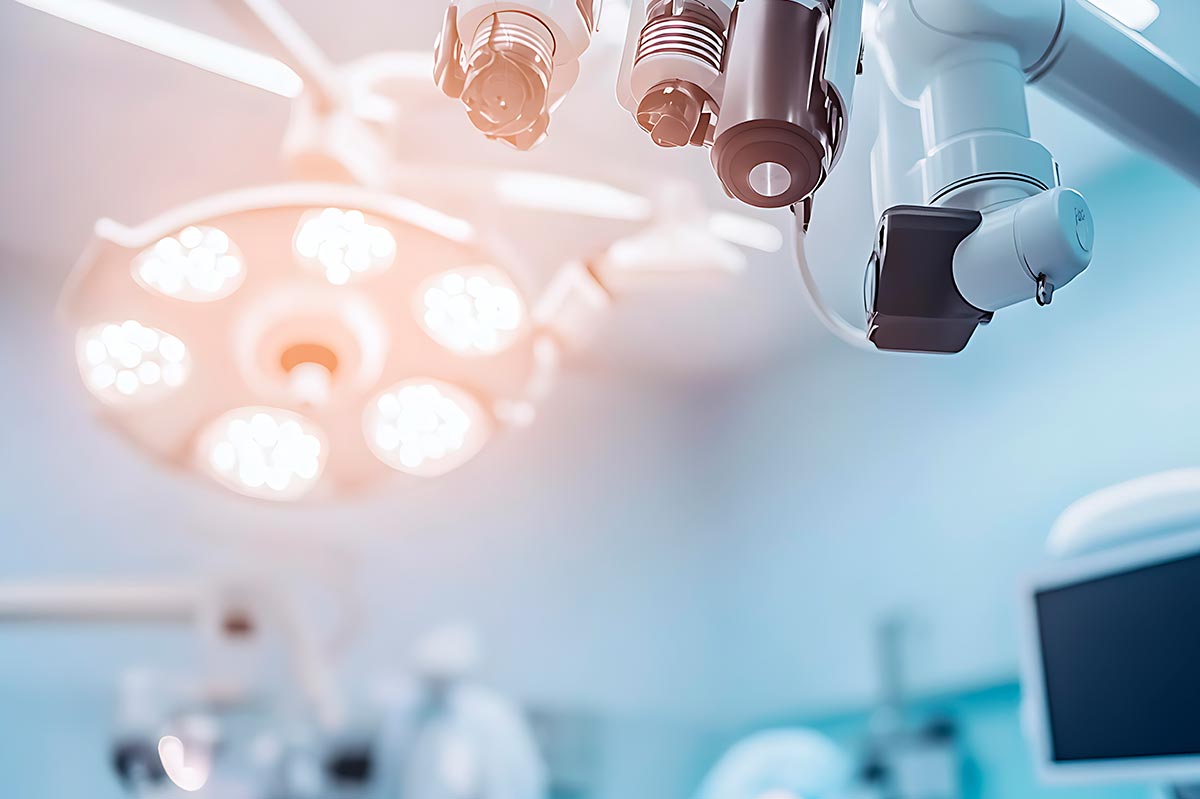
In controlled development environments, lighting is stable, cables are undisturbed, and systems are rarely subjected to the mechanical and environmental stresses they will encounter in daily use. Under those conditions, many design decisions appear sound.
Once systems are deployed in real-world medical environments, assumptions are tested.
Lighting must remain consistent despite cleaning procedures, mechanical repositioning, or changes in ambient conditions. Cables must endure repeated motion, sterilization exposure, tight bend radii, and long duty cycles. Over time, small variances that seemed insignificant during development can accumulate into measurable performance drift.
These issues are rarely the result of oversight. They are the result of underestimating how unforgiving medical environments can be.
Lighting: The Primary Determinant of Image Quality
In medical imaging, lighting defines contrast before a single pixel is captured. It determines whether features are distinguishable, whether edges are sharp, and whether defects can be detected reliably.
Highly reflective instruments, translucent materials, and biological surfaces interact with light in ways that are difficult to predict without application-specific testing. Directional lighting may enhance surface detail but introduce glare. Diffuse lighting may suppress reflections but reduce edge definition. Wavelength selection can dramatically change what the camera “sees,” especially when imaging through fluids, plastics, or coatings.
Because of this complexity, lighting cannot be specified generically. It must be engineered in the context of the application, the environment, and the system's expected lifecycle.
In successful medical imaging programs, lighting is treated as a variable to be iterated, not a fixed accessory selected late in the design process.
(See: Advancing Surgical Lighting Through Engineering Partnership)
Consistency Matters More Than Brightness
One of the most common misconceptions in vision system design is that brighter lighting is inherently better. In practice, consistency is far more important than intensity.
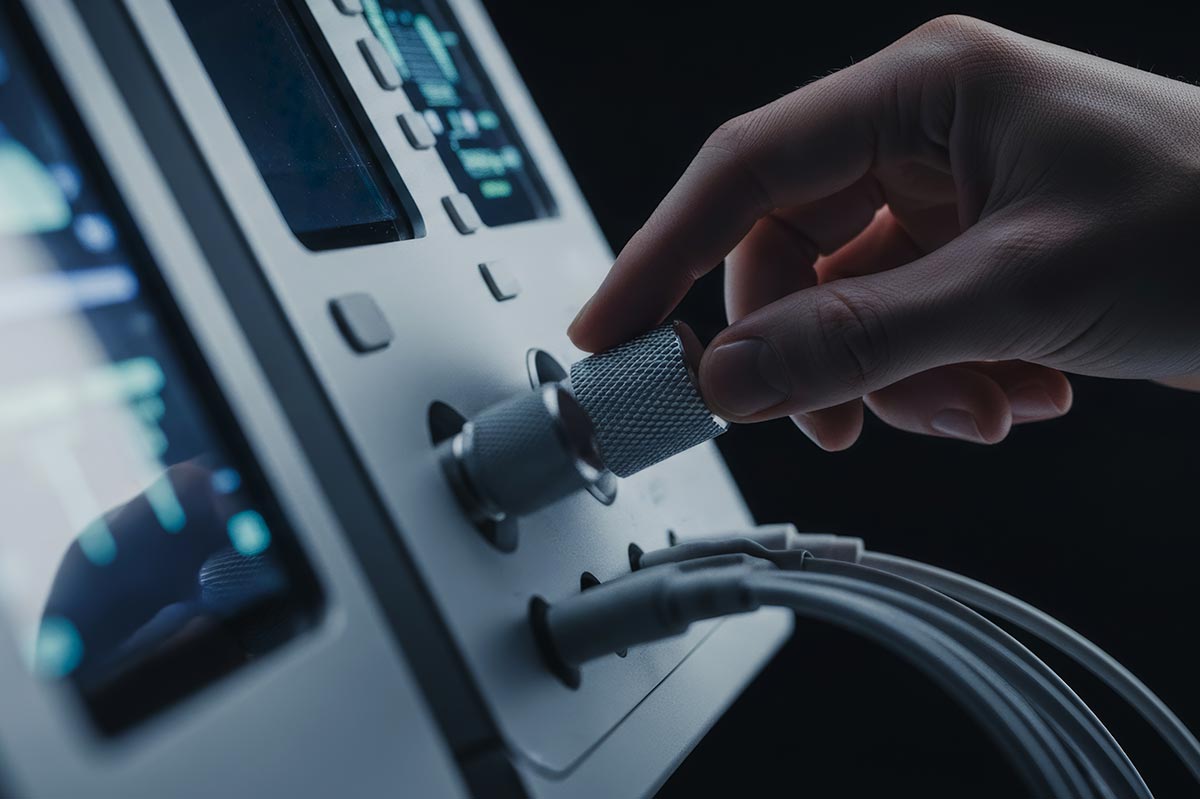
Medical imaging systems depend on stable illumination over time. Variations caused by LED aging, thermal effects, or mechanical shifts can introduce subtle changes that affect image processing and measurement accuracy. These changes may not trigger immediate failures, but they erode confidence in inspection results.
Designing for consistency means:
-
Selecting lighting technologies with predictable long-term behavior
-
Managing heat dissipation
-
Controlling light geometry and diffusion
-
Ensuring repeatability across multiple systems and facilities
This is especially critical for OEMs deploying systems globally, where identical performance across regions is a requirement rather than a preference.
Cabling: The Quiet Failure Point
If lighting defines what the camera sees, cabling determines whether the signal arrives intact.
Medical imaging systems often operate in environments that challenge cable integrity: frequent motion, tight routing constraints, exposure to cleaning agents, and repeated operator handling. Over time, these stresses can degrade signal quality or lead to intermittent failures that are difficult to diagnose.
Unlike obvious component failures, cable-related issues often manifest as inconsistent behavior - dropped frames, synchronization errors, or intermittent disconnects. These symptoms can be mistaken for software or sensor problems, delaying root-cause identification.
Engineering cable assemblies specifically for the application, considering flex life, shielding, connector robustness, and service access, significantly reduces these risks.
Reliability Is an Engineering Outcome, Not a Procurement Outcome
Lighting and cabling challenges highlight an important distinction: reliability is not achieved through component selection alone. It is achieved through engineering discipline applied across the entire system.
This includes:
-
Understanding how components interact under real operating conditions
-
Evaluating lifecycle expectations early
-
Considering serviceability and replacement scenarios
-
Ensuring long-term availability and global support
In medical OEM environments, where downtime and revalidation carry high costs, these considerations are not optional. They are part of responsible system design.
Why Discovery and Feasibility Reduce Long-Term Risk
Many lighting and cabling issues can be identified before deployment through structured feasibility testing. Evaluating illumination strategies on real parts, testing cable assemblies under motion and environmental stress, and validating performance stability over time all reduce uncertainty.
These efforts may not be visible in final product specifications, but they are reflected in system reliability years later. Feasibility work shifts decision-making from assumption to evidence, an approach that resonates strongly in regulated environments.
Designing for Scale and Longevity
Medical imaging systems rarely remain static. Platforms evolve, production volumes increase, and systems are replicated across facilities. Designs that rely on fragile or hard-to-source components often struggle as scale increases.
By contrast, systems designed with standardized, well-supported lighting and cabling solutions are easier to replicate, maintain, and adapt. This becomes especially important for OEMs operating across regions, where consistency and logistics support are essential to maintaining performance.
Frequently Asked Questions
Final Perspective
In medical imaging systems, success is rarely defined by the most visible components. It is defined by how well the system performs after months and years of real-world use.
Lighting and cabling may not attract attention during early design discussions, but they often determine whether a system remains stable, repeatable, and trusted over its lifetime.
For engineering teams, addressing these elements with the same rigor applied to sensors and software is not overengineering - it is essential design practice.