
Vision to Reality
Advancing Surgical Lighting Through Engineering Partnership
Illuminating Precision, Together
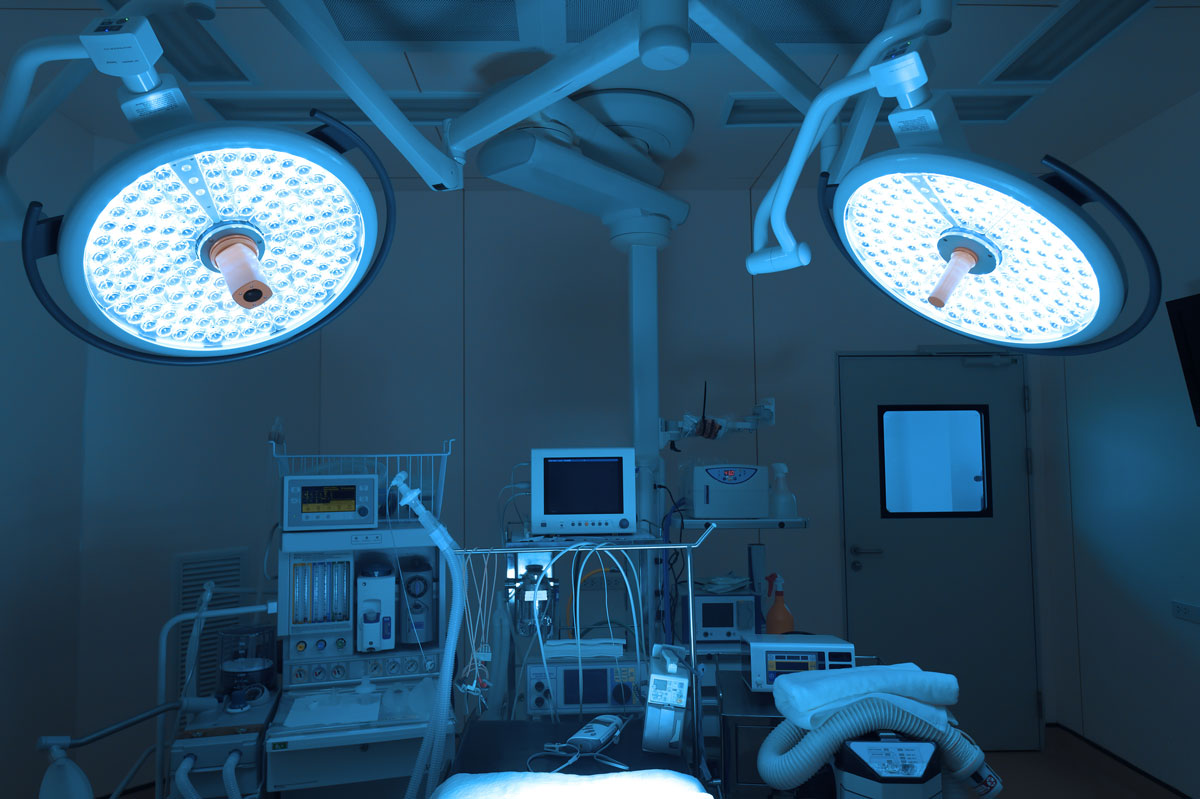
In the modern operating room, light is more than visibility—it’s clarity, control, and confidence.
A leading global manufacturer of surgical and clinical lighting systems set out to evolve its product line to meet the demands of today’s digital operating suites: integrated imaging, HD video capture, and ergonomic ease for surgeons.
What began as a product support relationship with STEMMER IMAGING USA grew into a decades-long collaboration that has quietly powered generations of innovation. Together, they’ve solved engineering challenges that most end users never see—ensuring surgeons see exactly what they need, when it matters most.
The Challenge: Bridging Analog Past and Digital Future
For over two decades, the OEM’s lighting systems had been the standard in operating rooms across hospitals, surgical centers, and clinical facilities. But as medical visualization moved from analog to digital, the very architecture that had defined their reliability was reaching its limits.
- Signal bottlenecks: Legacy analog block cameras could no longer deliver the HD and 4K imagery demanded by modern surgical teams.
- Mechanical constraints: Lightheads used compact “slip rings”—rotating couplers that carry power and data through the pivoting joints of ceiling-mounted systems. These allowed smooth motion but only supported a limited number of electrical channels.
- Transition risk: Migrating to digital cameras meant multiplying those channels, threatening both form factor and signal integrity.
- Marketing pressure: Competitors were advertising “4K-ready” systems, forcing an upgrade without compromising sterile field compliance.
The OEM’s design team needed to reimagine the system from within—maintaining mechanical design and optical quality while enabling digital performance.
The Approach: Practical Engineering Meets Persistent Partnership
Through consistent collaboration and trust, the teams turned mechanical constraints into engineering opportunities.
1. Converting Constraints into Capabilities
STEMMER IMAGING USA’s engineers joined the OEM’s R&D discussions early, identifying the true constraint: not the camera, but the data path through the slip ring. Traditional analog block cameras were easily routed through the compact mechanical joint. The modern digital solutions used a flat ribbon cable that couldn’t twist, bend, or travel more than a few inches.
Working together, the teams proposed a solution: use a conversion board to translate the video signal to HD-SDI (Serial Digital Interface)—a format that compresses multiple signals into just a few shielded conductors. By reducing the electrical channels, they fit digital imaging seamlessly within the same mechanical design envelope.
2. Engineering Evolution, Not Disruption
The shift to HD-SDI delivered full 1080p and 4K capability, allowing surgeons to display live surgical imagery on large overhead monitors without latency. STEMMER IMAGING’s engineers sourced and tested compatible cameras, lenses, and interface boards to ensure thermal stability, signal fidelity, and compliance with medical-grade EMI standards—all while minimizing redesign costs.
This incremental, modular approach kept the OEM’s production line moving and avoided a costly full retooling of their lighthead assembly.
3. Lifelong Partnership in Progress
Over the years, the collaboration has continued through multiple technology transitions—from analog to digital, from HD to 4K, from halogen to LED. With each cycle, STEMMER IMAGING USA provided both technical and logistical continuity: stable component sourcing, firmware consistency, and inventory alignment for long-term serviceability.
Today, the relationship spans more than 25 years, with the same ethos that started it—a shared commitment to reliability in critical environments.
The Results: Modern Imaging in a Familiar Form
- 4K-ready surgical lighting system engineered without redesigning mechanical components.
- Slip-ring channel utilization optimized—enabling high-bandwidth video transmission within legacy geometries.
- Stable, validated architecture carried forward across multiple product generations.
- Two-and-a-half decades of partnership providing supply assurance, engineering consistency, and peace of mind.
For the OEM’s engineers, this meant progress without upheaval. For surgeons, it meant uninterrupted trust in the tools above their heads. For both teams, it reinforced what enduring collaboration can achieve: innovation without compromise.
Why It Matters
The evolution of surgical visualization is a study in balance—between precision and simplicity, between upgrading and overhauling.
What makes this story unique isn’t just the technology, but the relationship: the quiet, consistent teamwork that keeps life-critical systems improving year after year.
STEMMER IMAGING USA’s role wasn’t to dictate a solution; it was to listen, test, adapt, and deliver—combining local engineering expertise with global supply confidence to help one of the world’s most respected OEMs evolve on its own terms.
Partnership Principles
- Continuity Builds Confidence – Sustaining design architecture across decades requires both technical discipline and mutual trust. Every generation builds on the last.
- Innovation Without Disruption – The best engineering advances feel invisible to the end user. True success means progress that preserves what already works flawlessly.
- Transparency Strengthens Trust – From component lifecycle updates to design trade-offs, open dialogue keeps development steady and surprises rare.
- Global Reach, Local Accountability – Worldwide logistics paired with local support ensures that every new iteration ships on time—and every legacy model stays serviceable.
Looking Forward
As the medical imaging landscape continues to evolve—from HD to 8K, from physical controls to voice-guided operation—STEMMER IMAGING USA remains embedded as an innovation partner.
Together, the teams are exploring next-generation interfaces, AI-assisted auto-adjustment, and advanced calibration techniques that will shape the next decade of surgical visualization.
The light continues to evolve—but the partnership remains constant.